 Skiff
SkiffGrok beside other agents
Put up to four sessions in a named group, from any mix of agents. Compare how Grok and another agent handle the same task.
Grok Build, xAI's coding agent, runs in a terminal as grok. Skiff is a desktop app for Linux and macOS that runs many terminals at once: Grok, Claude Code, Codex or any other command line. Each session sits under the project and Git worktree it works in.
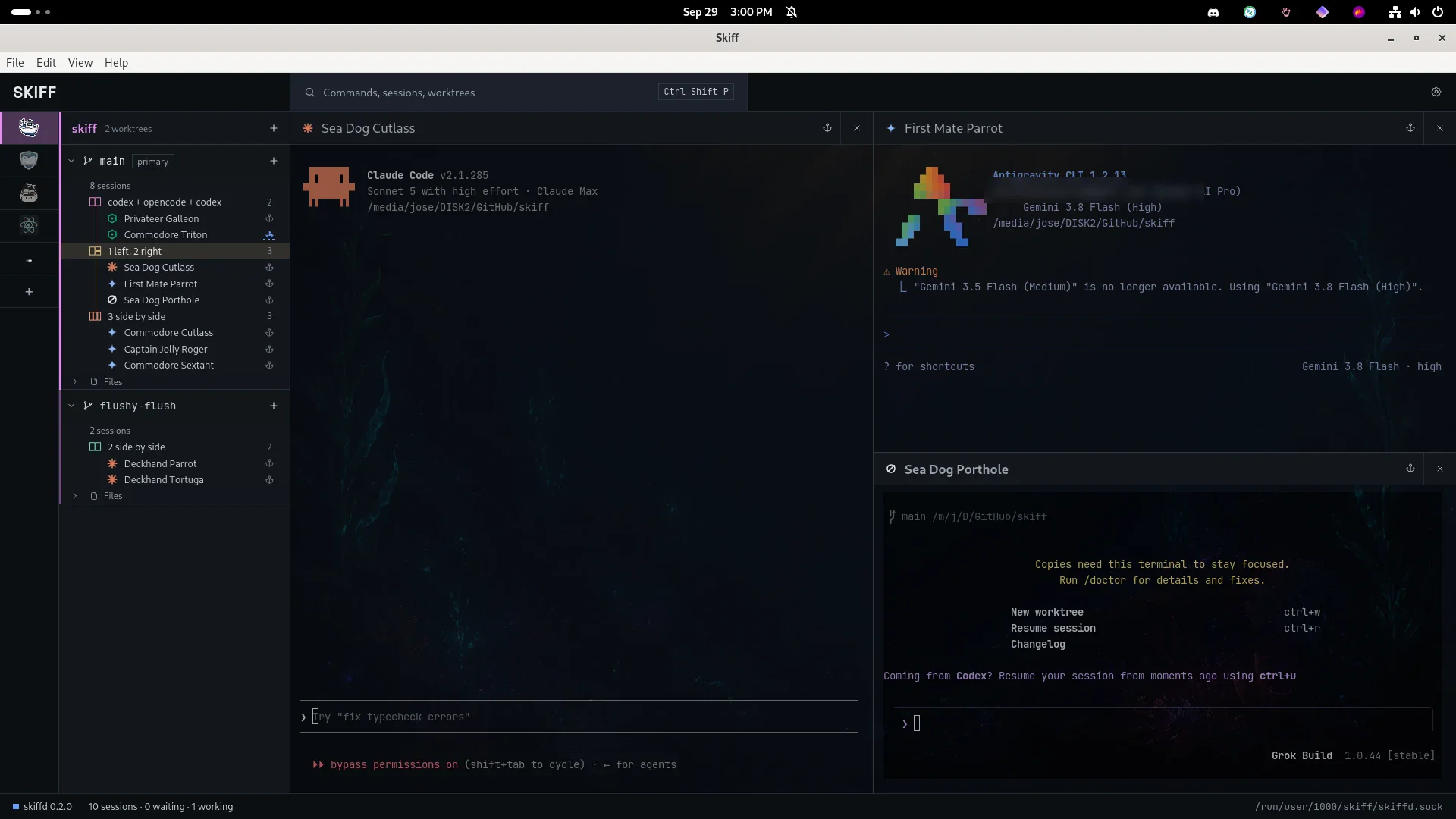
v0.3.1Groups in two worktrees, with Claude Code, Antigravity and Grok.
Skiff starts the grok command you already have. Grok Build itself does not change.
Put up to four sessions in a named group, from any mix of agents. Compare how Grok and another agent handle the same task.
Make Git worktrees in Skiff and start a session in each one, so parallel tasks don't edit the same files.
Skiff reads Grok's approval prompts from the screen, including Allow once and Reject for a command, and rings a bell on that session.
A daemon, skiffd, owns every terminal. Grok keeps going after you close Skiff. Open it again and each terminal shows its last screen.
Each worktree lists the files Grok changed. Double-click one to see the diff, or open it in your own editor.
The skiff command lets an agent start more sessions, type into them and wait for them to finish.
Skiff installs no hooks and writes nothing into Grok's configuration in ~/.grok. It runs the CLI you signed in to, with your own xAI plan. Change the command in Settings if you start Grok with your own flags.
.deb, .rpm or AppImage) or macOS on Apple Silicon.grok session in the worktree. Add another agent to the same group when you want a second opinion.You don't type skiff commands yourself. Ask Claude Code or Codex in plain words, from any Skiff terminal:
Open a Grok next to me and ask it to review the uncommitted changes. Tell me what it finds.
The agent runs the commands, waits for the other session and reports back. It learns how from the skiff-cli skill, a one-time copy into ~/.claude/skills/ for Claude Code or ~/.codex/skills/ for Codex. The app does not install it for you.
skiff new --agent grok --name grok-review
skiff group add . grok-review --split right
skiff wait grok-review --for idle --timeout 60
skiff send grok-review "Review the uncommitted changes" --enter
skiff wait grok-review --for any-not-working --timeout 600
skiff peek grok-review
The full list is on the CLI page.
grok command, which is xAI's Grok Build. To run a different tool, change the command in Settings or add it as your own agent.grok command you run in a terminal, so it uses whatever login that command already has.